Cavern detection in baked products
Smart Anomaly Detection for Perfect Baked Products
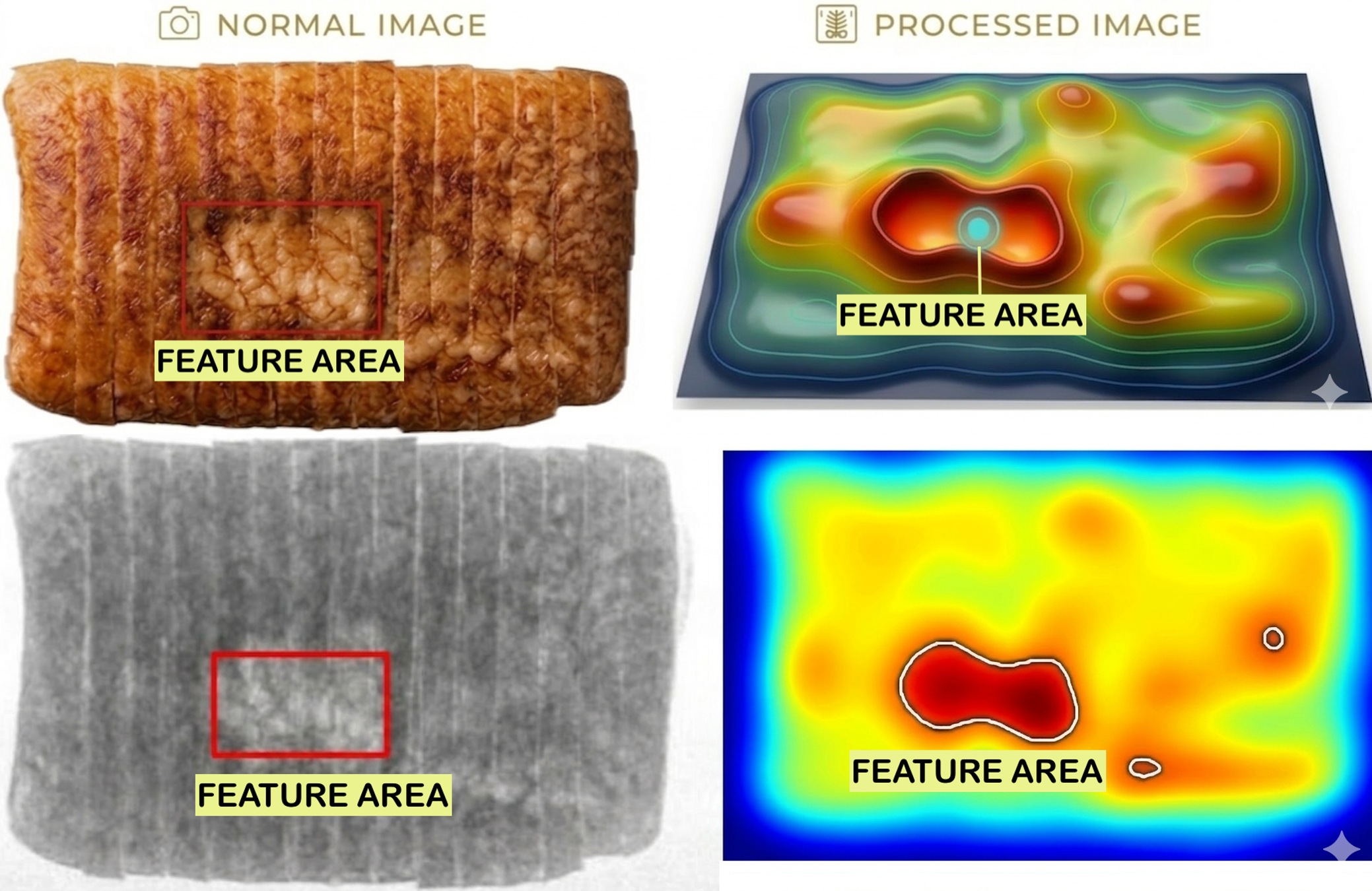
See Inside Your Products to Catch Hidden Defects
Baked products can look perfect on the outside while hiding serious quality issues within. Internal caverns, air pockets, and structural defects are invisible to the human eye but can lead to customer complaints, returns, and damaged brand reputation.
Mekitec's anomaly detection technology sees what traditional inspection cannot—the internal structure of your products as they move down the production line.
Why internal defects are so challenging to detect
The outer appearance of baked goods rarely reveals what's happening inside. A loaf of bread might have the perfect crust while containing large caverns that make it unsuitable for sale. Similarly, meat products can harbor dense foreign objects like bone fragments that pose serious safety risks.
Traditional visual inspection only catches surface-level problems. By the time internal defects become visible, entire batches may already be compromised, leading to recalls, waste, and lost customer trust.
What the inspection achieves
This advanced anomaly detection targets multiple quality challenges in a single scan:
- Internal cavern detection in baked products like bread, cakes, and pastries
- Foreign object identification including high-density contaminants in meat products
- Structural integrity verification to ensure products meet consistency standards
The system works at full production speed, catching problems before defective products leave your facility.
How it works
The X-ray system creates a detailed density map of each product as it passes through the inspection zone. Advanced algorithms analyze this internal structure, comparing it against expected patterns to identify anomalies.
For baked goods, the system recognizes normal air bubble distribution versus problematic caverns. For meat products, it distinguishes between expected product density and unwanted high-density objects like bone fragments.
The intelligent filtering system reduces false rejects by understanding the difference between acceptable product variations and genuine defects.
Key benefits for bakeries and food processors
Identify internal caverns, air pockets, and foreign objects that visual inspection cannot detect
Prevent customer complaints and returns by ensuring only quality products reach the market
Inspect at full line speed without slowing down your production process
Handle both low-density defects in baked goods and high-density contaminants in meat products
Where this technology makes the biggest impact
This anomaly detection approach is particularly valuable for:
- Commercial bakeries producing bread, rolls, and pastries where internal structure matters
- Meat processing facilities where bone detection is critical for consumer safety
- Mixed production lines handling both baked goods and meat products
- Quality-focused operations where brand reputation depends on consistent product excellence
The system adapts to different product types, making it ideal for facilities with diverse product portfolios.
Next step: test with your products
Every product has unique density characteristics that affect detection performance. The most reliable way to validate results is through product testing with your specific items, packaging, and line conditions.
Share details about your products, current quality challenges, and production requirements, and we can design a testing program that demonstrates real-world performance for your operation.
Key Features
Dual Anomaly Detection
Identifies both low-density caverns in bread and high-density foreign objects like bones in meat products
Internal Structure Analysis
Sees inside products to detect hidden defects that visual inspection cannot catch
Intelligent Filtering
Distinguishes between acceptable product variations and genuine quality defects
Real-time Quality Control
Instantly flags defective products at production line speeds without stopping the flow