Foreign Object Detection at the CCP
X-ray inspection as the control measure for physical hazards
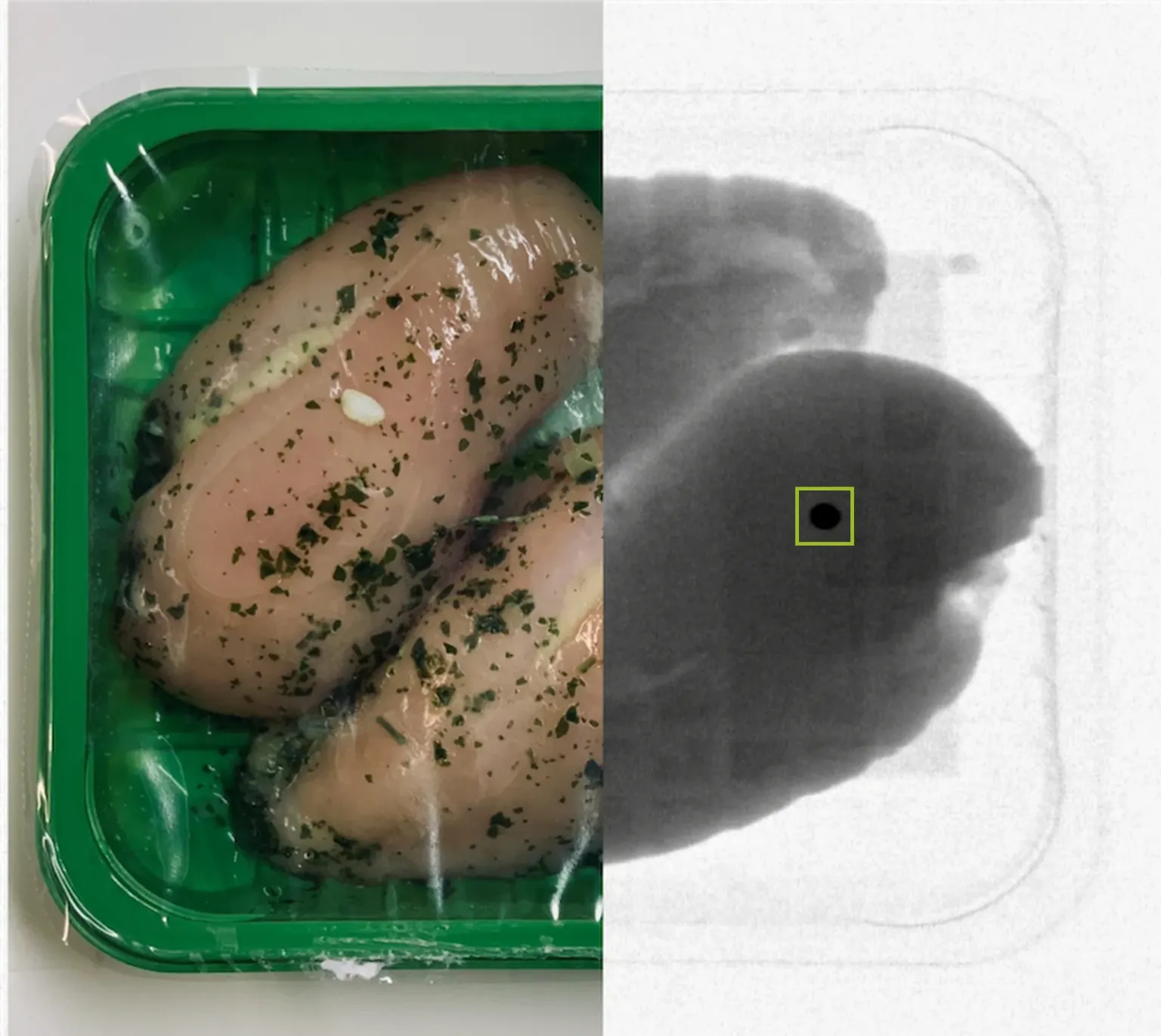
Inspection Is Where the CCP Starts
When the hazard analysis identifies metal, glass, stone or other hard foreign bodies as a significant hazard, the step that controls them can become a Critical Control Point. X-ray inspection can serve as that control measure when its role is justified and validated for the actual product, package, hazard and line.
The requirement is not that the X-ray system was switched on. It is that every in-scope pack passed through an operating inspection system under the conditions the validation assumed: the approved product settings, the way products are presented on the belt, the line speed and the packaging actually running.
What X-ray Inspection Detects
X-ray inspection measures how much X-ray energy passes through the product, which depends on density and thickness. That changes what can be found compared with metal detection:
- Metals and sufficiently dense foreign materials such as glass, stone, calcified bone and some dense plastics or rubber
- Through foil and metallized film, packaging that reduces or prevents conventional metal detection
- In wet or salty products, without the electromagnetic product effect that affects metal detectors
- In glass jars, bottles and dense containers, with MEKI AI functions for glass in glass containers and high-density containers
Detection is never a single number. Sensitivity depends on the foreign object's material, size, shape, orientation and position, and on product thickness, variation, packaging and line conditions. Small or thin aluminium fragments, for example, can be harder to find for X-ray than for a metal detector.
Responds to conductive or magnetic material. Foil and some metallized films reduce or prevent detection, and non-metallic hazards are not detected
Responds to density. Detects metals and dense non-metallic foreign materials, also through foil and metallized film
How Detection Performance Is Established
Application Testing
Mekitec confirms detection performance by testing the actual food, package, target foreign materials, line conditions and reject configuration:
- Your most difficult products in the actual packaging, including natural product variation
- Agreed test pieces of known material and size, for example stainless steel, glass or ceramic, placed where detection is hardest
- Good product in the same test, to measure false rejects
- An application test report that records the settings, conditions and results
A supplier's test supports the choice of configuration. Validating the installed application remains part of your HACCP plan. For a product-specific example, read how Snackwerks validated three MEKI ONE systems with its own snacks in metallized packaging and customer-supplied test cards.
Validated Conditions, Every Day
- Saved product settings: each product has its own inspection settings in MEKI AI, selected when the product changes
- Routine checks: Validation Mode reminds operators when a test-card check is due, records the result and stops the inspection if a check fails
- Recorded rejects: rejected packs are recorded with their X-ray images, so QA can see what the system detected (reject records with X-ray images)
Part of a Complete X-ray CCP
A Critical Control Point for foreign bodies has to answer five questions. Inspection answers the first one:
- INSPECT: Was the product inspected? See foreign object detection at the CCP (this page).
- REMOVE and PROVE: Was suspect product removed, and was removal confirmed? See reject confirmation.
- CHECK: Were the routine checks done? See Validation Mode.
- RECORD: Can the records be retrieved for a defined line, product and time window? See CCP Monitoring and reject records with X-ray images.
Equipment and software support the CCP. Validating it for each product remains part of your site's procedures. Read more in What Makes a Critical Control Point Complete?
Test Your Product
Find out what X-ray inspection detects in your product. Mekitec tests your actual product and packaging with the foreign materials you need to control.
Contact Mekitec to Test Your Product
Disclaimer: All information is provided for information purposes only and shall not be considered as assured characteristics. The information and technical data presented in this document are subject to change. Customers should obtain and verify the latest relevant information before placing orders.
Key Features
Beyond Metal
Metals and sufficiently dense glass, stone, calcified bone and some dense plastics or rubber
Through Foil and Metallized Film
X-ray does not rely on the electromagnetic response used by metal detectors
Application-Tested Performance
Confirmed with your actual product, package, foreign materials and line conditions
Rejects Recorded With Images
Rejected packs are recorded with their X-ray images, ready for review